
Writing Outside Your Lived Experience
A Conversation with Writer and Educator Allison Kirkland


When you put two writers together to talk about language, they are definitely going to write it out!
Recently in my writing, I was surprised to discover that a character I was getting to know on the page was in a wheelchair due to an accident. Theo is resourceful, an accomplished gamer, with a huge social media following where her platform is about body positivity and empowerment for folks with disability. Realizing that I had a deep responsibility as a writer and as a person to portray Theo with as much authenticity and empathy as possible, I started a deep dive into research.
I found the talented writer, editor, and educator Allison Kirkland right here on Substack and reached out to her. Not only did Allison connect me to the equally insightful and generous author Emily Ladau, who offered to (and did!) consult, but Allison also agreed to this interview so that I could share her insights with other writers.
Here, we peel back the layers of writing about characters who do not share the author’s lived experience. Stay with us! It’s long! But if you don’t have the attention span to explore this important topic with us, then you might want to take a look at that. (In other words: Get off TikTok and learn yourself something.)
I want to preface this conversation by recognizing that the topic of writing outside one’s lived experience, particularly when writing fiction, is an ever-evolving conversation, one that will continue to change.
Lisa Unger:
Diversity in crime fiction deeply enriches the stories we tell — because the world is a mosaic and every piece has its unique place and contributes to the whole. (Fiction is just like life, right?) But writing about someone who doesn’t share your lived experience requires more than great care.
You’ve written beautifully and are a passionate advocate for people with disabilities in the arts. Can we start the conversation with my asking what would you like writers to consider before they include a character with a disability in their work, specifically if they don’t share that experience?
Allison Kirkland:
First of all, Lisa, thank you so much for this thoughtful question. I look forward to digging into this topic with you. I want to preface this conversation by recognizing that the topic of writing outside one’s lived experience, particularly when writing fiction, is an ever-evolving conversation, one that will continue to change. I also want to caveat that I don’t speak for every disabled writer – however, I have been thinking and writing deeply on this subject for a number of years.
When thinking about character development when it comes to disability, I invite writers to think about how their fictional character might view their disability. Do they view it as part of their identity – and if so, how? How has their disability shaped their worldview, and the ways they move in the world? Do they hang with lots of other disabled people? Or not? Do they use the word disabled to describe themselves? Or do they prefer “person with a disability”?
And who are they outside of their disability? What else do they think about, care about, love, hate, wrestle with? Taking some time to answer these questions could give you a more well-rounded view of your character and their internal world as well as how their identity is being shaped.
Occasionally I’ll read a great fiction book and feel that the disabled character is being used solely to make the main character look especially kind or accepting. Example: let’s say the main character is set up to be a rule breaker, or especially mean and closed off. But all of a sudden, we see that he’s a caretaker for his disabled younger brother. Suddenly we see him in a new light! He’s patient and kind, willing to caretake in a way that others are not. But where does this leave the disabled character? Does the disabled character have other functions outside of telling us more about the main character? Do we get to see their inner life?
Historically, disabled characters in fiction have often functioned to uphold existing stereotypes: devoid of sexuality, requiring extreme levels of care, stripped of their own agency, or seen as unusually angelic and “inspirational.” It has been heartening to see this change as writers and readers continue to educate themselves. TV shows like “Breaking Bad,” “Sex Education” and “The Pitt” are known for really nuanced portrayals of disability.
In reality, disabled people are as varied and complex as any other human being. Let’s show these characters in all their complexity!
Fiction is an act of creation, at its best an act of empathy. A good story, a well-conceived character, can open eyes, open doors, illuminate different experiences.
Lisa Unger:
I love this answer. It seems like common sense (or should be), that people are just people. And that in any community — and in the human race at large — there’s a range of abilities, experiences, attitudes, identities. When we approach our characters with that understanding, it forces us to develop them beyond stereotypes, cultural bias, and tropes. For a character to come alive for the reader, she has to have her own journey. Taking the time to get to know what that is, can only enrich your writing — and your humanity. And maybe the humanity of your readers.
As a fiction writer, I feel the need to inhabit character, even those with whom I don’t share a lived experience. Talking to you and to Emily and digging into language and how it can be used to harm or heal, has been enriching. Thank you for helping me, and the other writers who will read this, get smarter, better at what we do and more awakened to the impact of our words, stories, and characters.
In an interview, famed actress Meryl Streep was asked how she could so totally inhabit the lives of people with whom personally she had not much in common. (I think it was an interview about “The Iron Lady.”) And she said (paraphrasing here) that she believed within every person is the seed of every other person. And that with empathy she could access almost everyone.
Fiction is an act of creation, at its best an act of empathy. A good story, a well-conceived character, can open eyes, open doors, illuminate different experiences.
But what is the line here? Or is there one? Is it ever just not acceptable to write about someone with whom you might not share lived experience?
Allison Kirkland:
This is such a good question, and it’s a big one. Here are a few thoughts that come to mind for me, especially when I’m considering this question through the lens of disability.
If you do decide to write outside your lived experience, the first step is to be honest about what you might not know about this particular identity. Question your own assumptions and be willing to get honest with yourself. Explore, and be open to new information.
Interrogate and be honest about your own creative motivation to include a character outside your lived experience. Why does this fictional character have to embody this identity that’s different from your own? And root your character exploration in our shared humanity: what might you have in common with this fictional character, even despite your differences?
And then, branch out into research. Speak with different people who share the lived experience of the character you’re writing. Use active listening skills when doing your research; more listening than talking. Which is harder than it sounds! Be open to gentle feedback, especially from those who might inhabit that lived experience.
And here’s some guidance that’s particular to disability: it’s important to learn from disabled adults. If you’re on social media you might have run across accounts from “autism moms” and parents who are displaying their medically complex or disabled children in the name of awareness. These parents of disabled kids are often well meaning, but some – not all! – might make assumptions about the inner lives of their children. Proximity to disability is not the same as lived experience of disability. So I think our best teachers, at this moment in time, are disabled adult activists. There are many of them! Emily Ladau, Carly Findlay and Rebekah Taussig are a few who come to mind.
There are many craft essays on this topic. I’ll direct you to one of my favorites: “There is No Secret to Writing About People Who Do Not Look Like You,” by the fiction writer Brandon Taylor. This essay is *mic drop*
There are so many gorgeous, moving, memoirs written by disabled writers that illuminate their lives and show them in all their complexity.
Lisa Unger:
Brandon Taylor’s essay is powerful and moving. He has strong opinions about sensitivity readers and diversity panels which I understand. But I think my key takeaway is this: “You can’t write, if you can’t empathize.” This is true for any of our characters. Because no person has our same exact lived experience. Without empathy, we simply cannot imagine anyone and what their life might be like. Nor should we as writers be “allowed” say, in my case, to write only about white, cisgender, abled, middle-aged women from a background of moderate privilege (though my Brooklyn, blue-collar-raised Italian father, and my Irish mother who came from extreme poverty, would laugh at that word). How dull! Empathy is as key to writing well as it is to living well.
You’re a teacher of creative non-fiction, personal essays, and memoir, with an MFA from The New School and a Graduate Certificate from the Denver Publishing Institute. From our conversations and this exchange, I have experienced first-hand your kindness, thoughtfulness, and insights, so I imagine that the writers you teach benefit tremendously from all of those things, as well as your professional expertise. Talk a bit about your work with individual writers, as well your workshops, and what brings you the most joy and satisfaction in these enterprises. Also maybe say a few words about your Substack.
Allison Kirkland:
Taylor’s essay was published in 2016, and I think it’s important to contextualize it that way. Personally, I think Taylor is too tough on sensitivity readers and diversity seminars. I think they can be a first step toward greater empathy, and I think they are important for a variety of reasons – primarily because their very existence underlines the importance of thinking deeply about this topic. And because everyone is coming at this from different levels of knowledge and experience. And because, let’s be honest, empathy is hard work! But I think Taylor’s nuanced point is an important one too, which is that empathy is the first step toward understanding, and that in order to write the other we must first be capable of a deep understanding of ourselves.
I’m glad you asked about my work because it brings up another way to foster empathy that I can’t believe I’m just now including: reading memoir, especially non-celebrity memoir. There are so many gorgeous, moving, memoirs written by disabled writers that illuminate their lives and show them in all their complexity. Truly, disability is not a monolith. I curated a list for Disability Pride that you can find on Bookshop.com if you want to diversify your reading list ...or just read some thoughtful, artful writing. I am also in the process of writing my own memoir.
I’m a voracious reader who loves books of all genres, but there’s something about memoir and personal essay that stands above the rest. There’s so much power in writing one’s own story, even if nobody else sees it. Writing my own story has helped me to understand myself better, and it’s also helped me gain empathy for my younger self and for the people in my life. (I wrote more about this in my essay for Brevity blog, Meet Me in the Middle: Reflections on 33,000 Words.)
Putting one’s life down on the page is incredibly empowering, so in my work as an instructor it’s rewarding to serve as a guide for those undergoing that transformation. I love witnessing my students’ growth – on a craft level, but also in the level of ownership they bring to their own lives.
The memoirist Jeannine Ouellette once wrote that writing personal essay leaves us “more able to live inside our own questions with less panic” and I find that has been the case for me. I also find it incredibly humbling and meaningful that so many people trust me with their most important personal stories. I don’t take that responsibility lightly.
When I graduated with my MFA I always knew that I wanted to teach as well as write. I launched my first workshops in 2018. I teach adult writers of all identities but primarily work with women writers of memoir and personal essay, both in person and online.
I launched my Substack, the intangibles, in June 2023. It grew out of a sense of impatience and has become an integral vehicle for my self-expression. I had been submitting essays to literary magazines, but the publishing world is so slow: it can sometimes take years (!) to find the right fit for your essay. But I had so much to say about what it means to live in my own unique body, and how it influences my creativity and my career. So I decided to launch my own reader-supported publication. I’ve really enjoyed being part of the conversation and building relationships with other writers who are passionate about exploring the intersections of creativity, discipline and difference.
Writing, and, to a lesser degree, publishing has taught me so much about myself and how I want to live in the world: I want to deeply observe the world, I want to become more comfortable with uncertainty, I want to remember the value of taking risks, I want to question my assumptions, and I want to live with more presence and greater empathy.
Allison Kirkland is smart, wise, and generous with her words and thoughts on this very important topic. Writers, if you want to learn more about Allison and her workshops visit allisonkirkland.com.
And subscribe to her Substack “the intangibles” at Allison Kirkland; I guarantee you’ll discover something you never thought of before, hopefully about yourself.
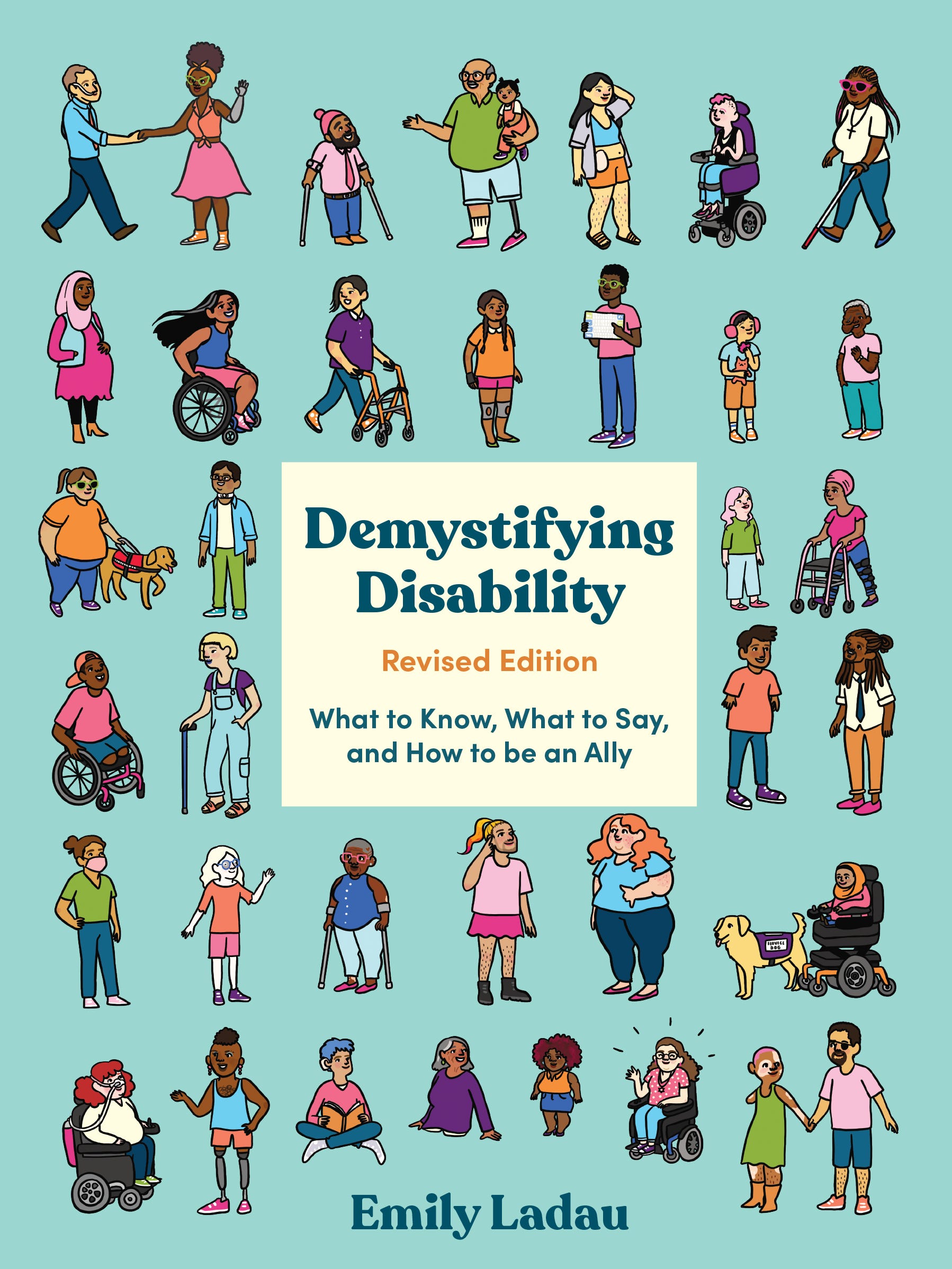
Writer and educator Emily Ladau has penned a thoughtful and illuminating book DEMYSTIFYING DISABILITY: What to Know, What to Say, and How to be an Ally, with a new edition releasing this September. I learned a great deal from her book, and also on her Substack “Words I Wheel By” at Emily Ladau.
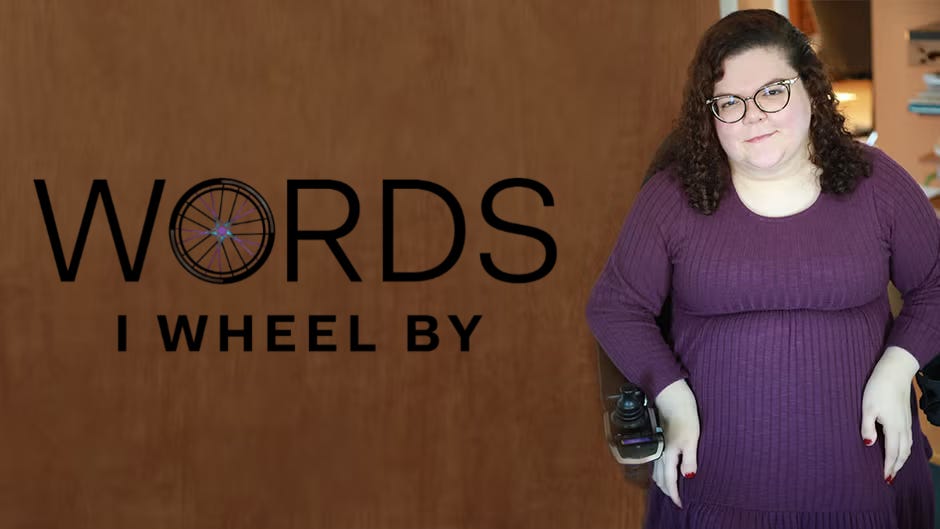
These two women are truly remarkable in their talent, their generosity, and their patience. It has been an honor and a joy to get to know them both. I hope you’ll get to know them, too.
 | A guest post by
|
Lisa, thank you again for including me in this conversation. I am so indebted to authors like you who commit to expanding their horizons and their communities. I can't wait to "meet" Theo when she's out in the world!
Allison, it was such a pleasure to meet you in person at this year's AWP in Baltimore. I applaud you, Lisa, and Emily for this conversation. I look forward to more!